The Ultimate Guide to Signet Rings
What piece of jewellery is a signature, a history lesson, and a stylish accessory all in one? The signet ring. For thousands of years, this small emblem has carried enormous weight, acting as a personal signature, a mark of family, and a symbol of power.
The signet ring has always been in a class of its own. By design, it's a personal emblem, a statement piece that tells a story, whether it carries a family crest, a simple monogram, or a modern symbol that's uniquely yours.
Its name, 'signet,' comes from the Latin word "signum," directly from its original function as a sign or seal. For millennia, this was a practical tool, not just an ornament. Pressed into hot wax, the ring's face left an impression that authenticated documents—an undeniable signature long before pens were commonplace.
Today, that functional necessity is gone, but the ring's symbolic power remains. The signet ring is having a major resurgence, embraced by a new generation not just for heritage, but as a definitive statement of personal style and identity.
This ultimate guide will walk you through the ring's rich history, its deep symbolism, and its modern styling. We'll explore its legacy and help you find—or create—one that tells your story.
What is a Signet Ring? The Basics
At its simplest, a signet ring is a ring that features an engraved or raised design on its flat top surface, known as the bezel. This design is its defining feature, traditionally a family crest, a monogram, or another unique symbol.
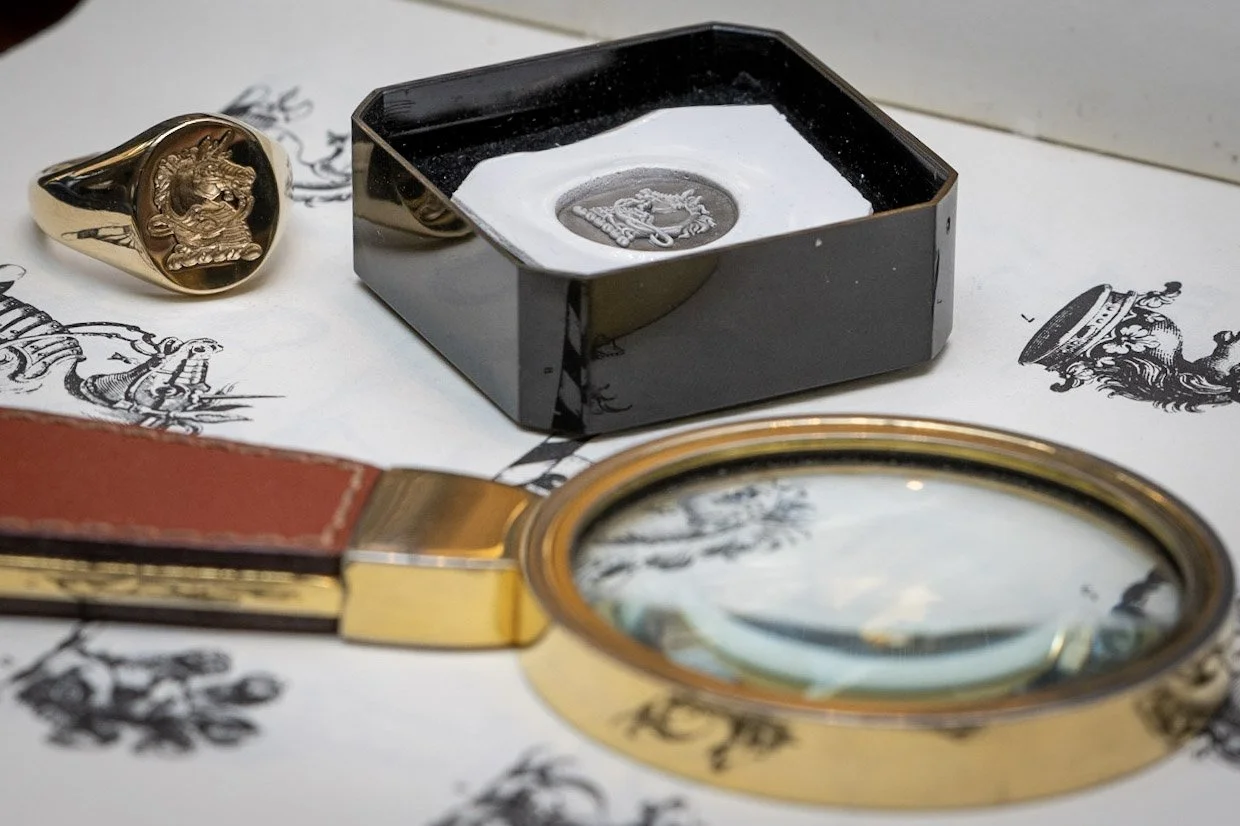
Its original purpose was entirely practical. The design was traditionally carved in reverse (a method called 'intaglio') so that when the ring was pressed into hot wax, it left a raised, legible impression. This seal was an individual's bond, used to authenticate letters, secure contracts, and verify the wearer's identity.
Over time, as literacy spread and wax seals became obsolete, the ring's function evolved from a practical tool to a powerful symbol. It became an emblem of status, a mark of family lineage, and a signifier of personal identity, primarily as we see it today.
The Fascinating History of Signet Rings
When it comes to the history of the signet ring, you have to look back—way back. The initial concept begins with the ancient Mesopotamian empire in 2350 BC. The Mesopotamians created stone cylinder seals with carved designs on their curved surface. The seals were rolled along the wet clay, leaving an impression of the design on the surface that served as the owner's identifying mark, somewhat like a modern signature.

Example of a Mesopotamian Cylinder Seal. Photo credit: History on the Net
Its earliest forms, as we know them today, appeared in Ancient Egypt, where pharaohs and high officials wore rings of stone or faience (a glazed ceramic). These weren't just decorative; they were administrative tools, used to stamp official seals and signify the wearer's authority.

An Egyptian signet ring with hieroglyph, a sign of the god Ptah. Photo credit: The History Press
This tradition was formalised in the Roman Empire, where rings, often made of gold or iron, signified social rank. But it was in the Middle Ages that the signet ring truly cemented its role. With widespread illiteracy, a personal seal was the only way to validate a document. Every person of influence—from kings and bishops to prominent merchants—had one, and its impression was their unforgeable, legally binding signature.
By the Victorian Era, the ring's utility had faded, but its status had crystallised. It became a staple accessory for any gentleman of standing, popularised as an heirloom piece, and the family crest or monogram became the dominant design —a quiet but clear statement of one's place in society.
In the 20th and 21st centuries, that aristocratic association began to dissolve. The signet ring has been reclaimed as a personal fashion statement, adopted by men and women alike, regardless of noble lineage. It's no longer just about where you come from, but about who you are, making it a more accessible and powerful vehicle for self-expression than ever before.
Anatomy of a Signet Ring: Styles & Materials
Before any engraving, the ring itself must take form. A signet ring's identity is built on two fundamental components: the style of its face and the material it's crafted from. These two choices work together to create the foundation for your personal emblem.
Face Shapes
When it comes to the different signet ring face shapes, you have four classic options, each with its own distinct character and feel.
Oxford Oval
Moving on to the ring's physical design, the bezel's shape is a key part of its character. The quintessential classic style is the Oxford Oval Signet Ring—a timeless, elongated shape that has long been the standard for traditional signet rings.
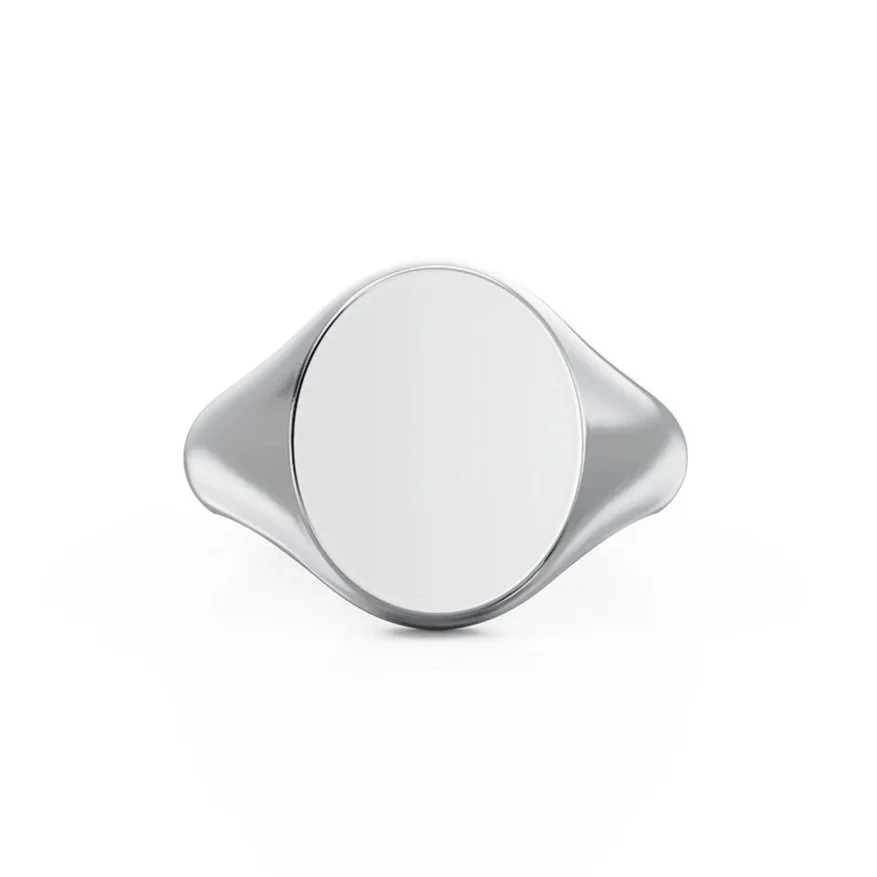
925 Oval Signet Ring
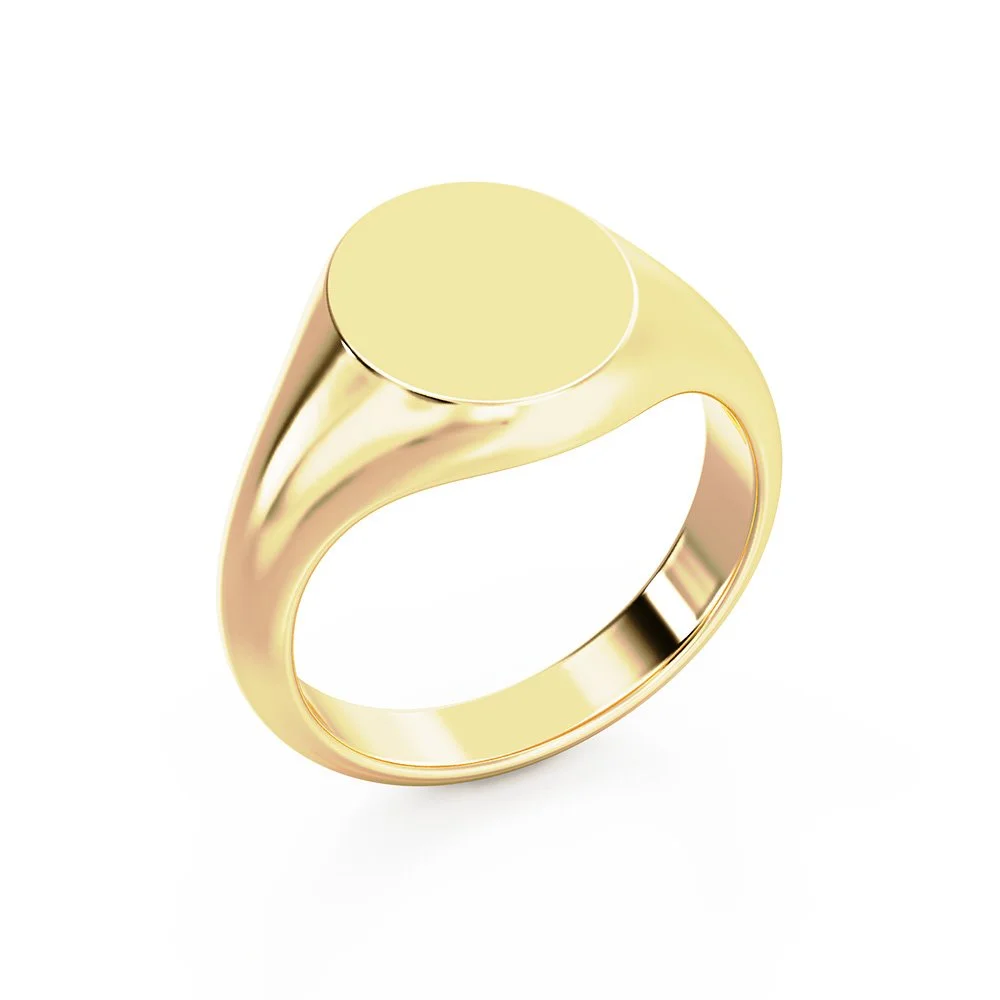
9ct Oval Signet Ring
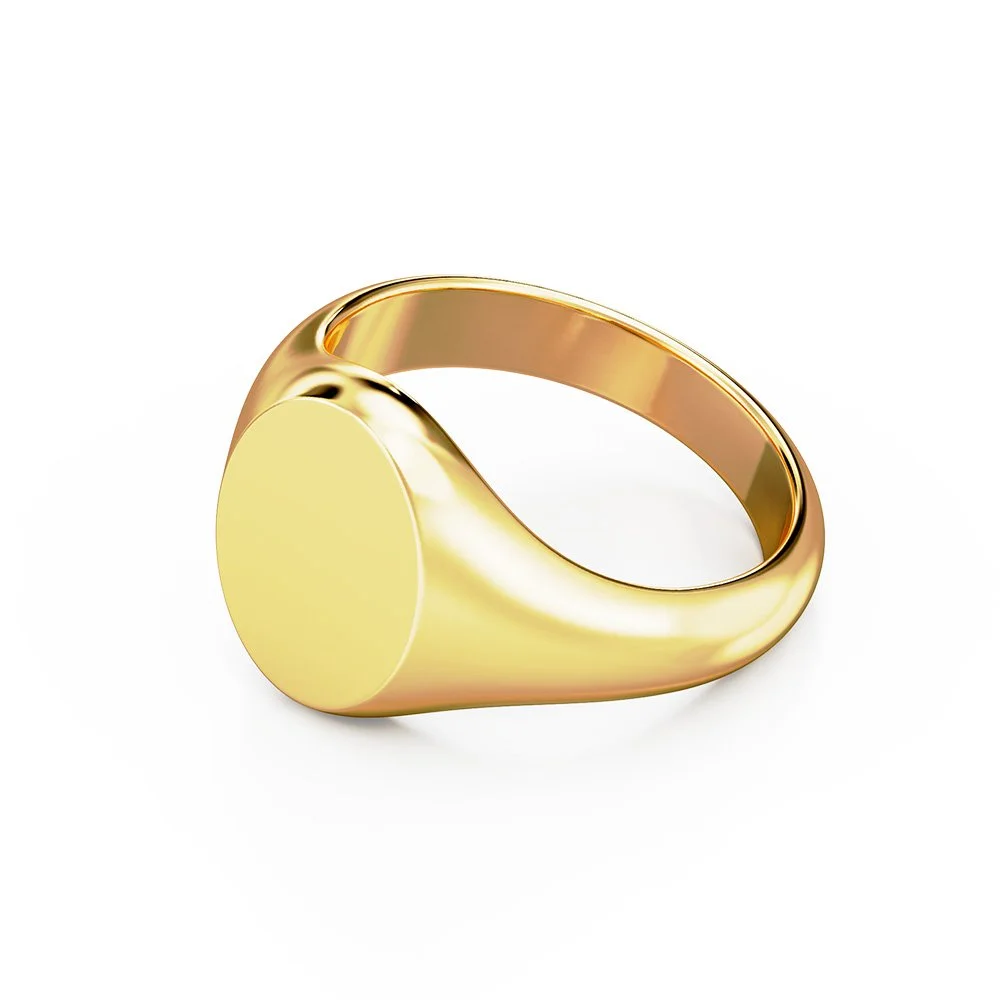
18ct Oval Signet Ring
Cushion Shaped
For those seeking a bolder, more substantial look, there's the Cushion-shaped signet ring, a soft-cornered square that offers a larger surface area for more complex designs and has a distinctly modern, confident feel in the hand.

925 Silver Cushion Signet

9ct Cushion Signet Ring

18ct Cushion Signet Ring
Round (Bulbous Oval)
Alongside the oval and cushion, you have the Round Signet Ring (or Bulbous Oval), a softer, more circular take on the classic oval that offers a friendly yet substantial presence.

925 Round Signet Ring
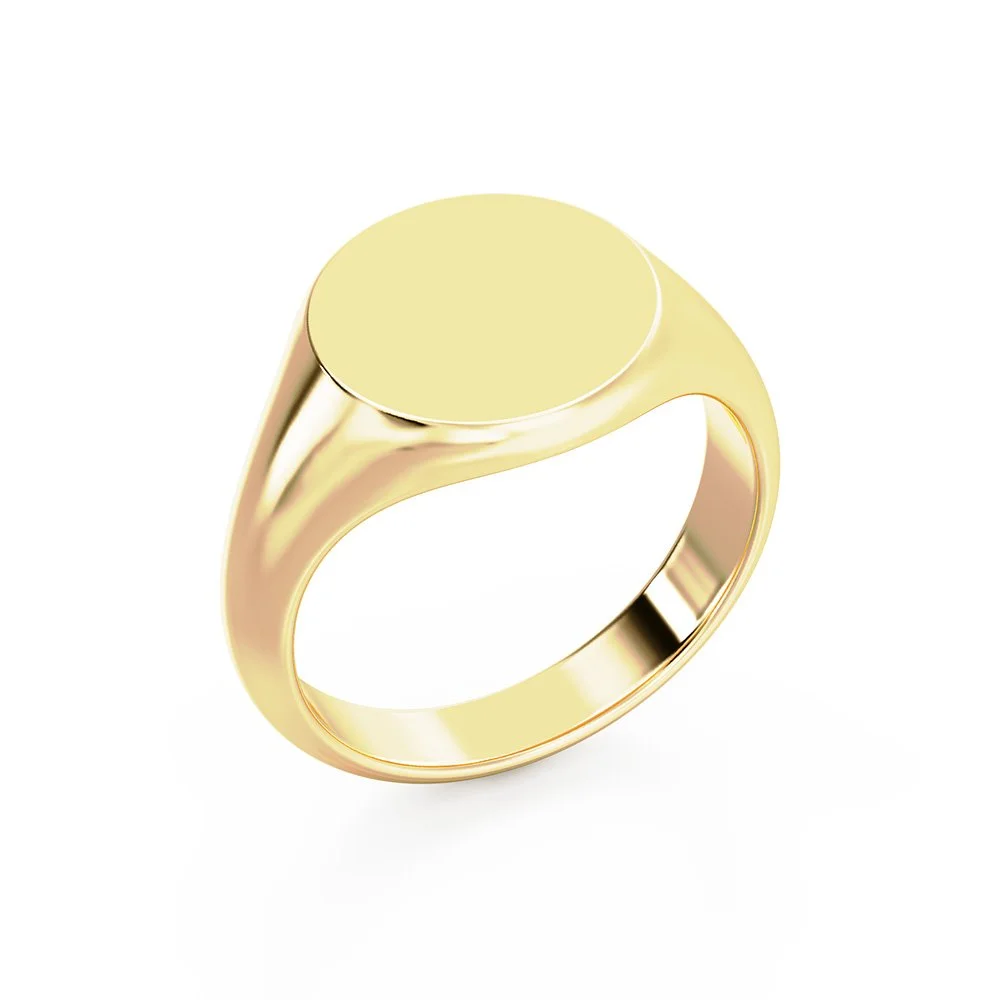
9ct Round Signet Ring
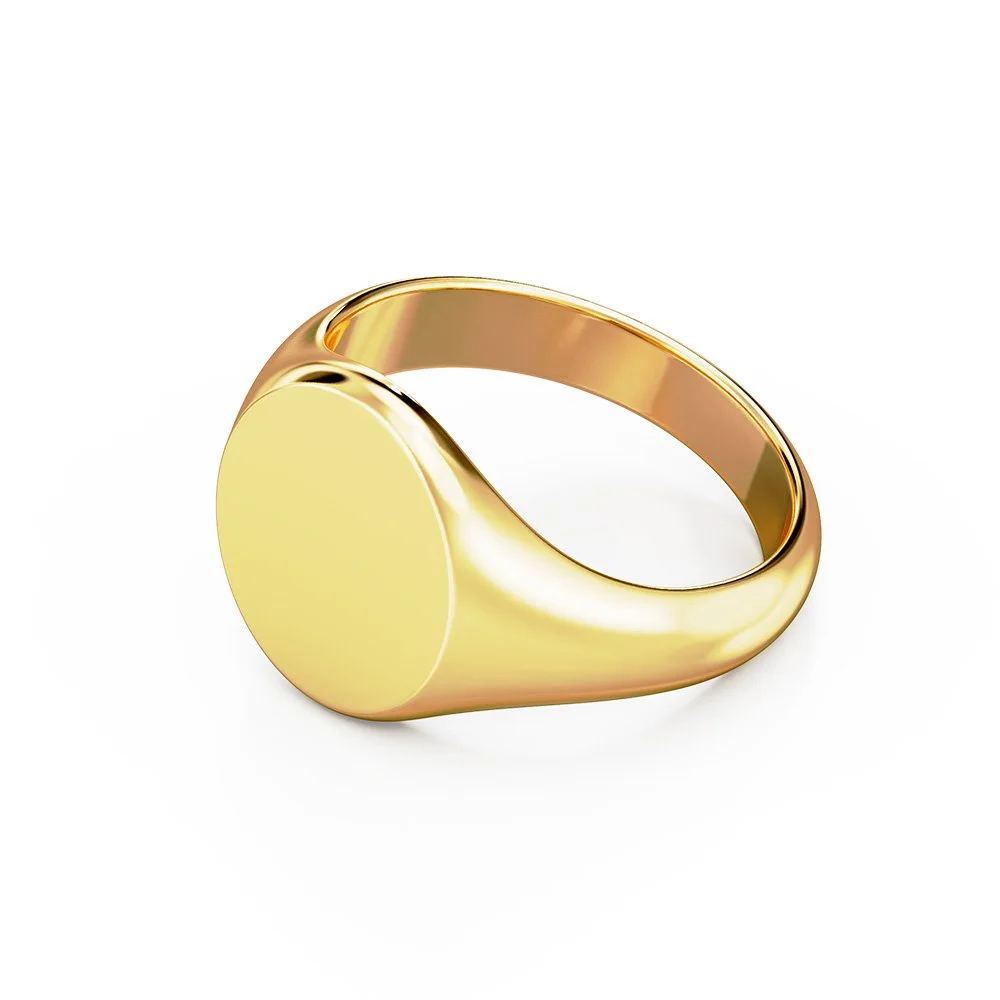
18ct Round Signet Ring
Square Shaped
Then there's the true Square signet ring —a modern, geometric, and bold choice that offers a clean, sharp alternative to traditional curved styles.

925 Square Signet Ring
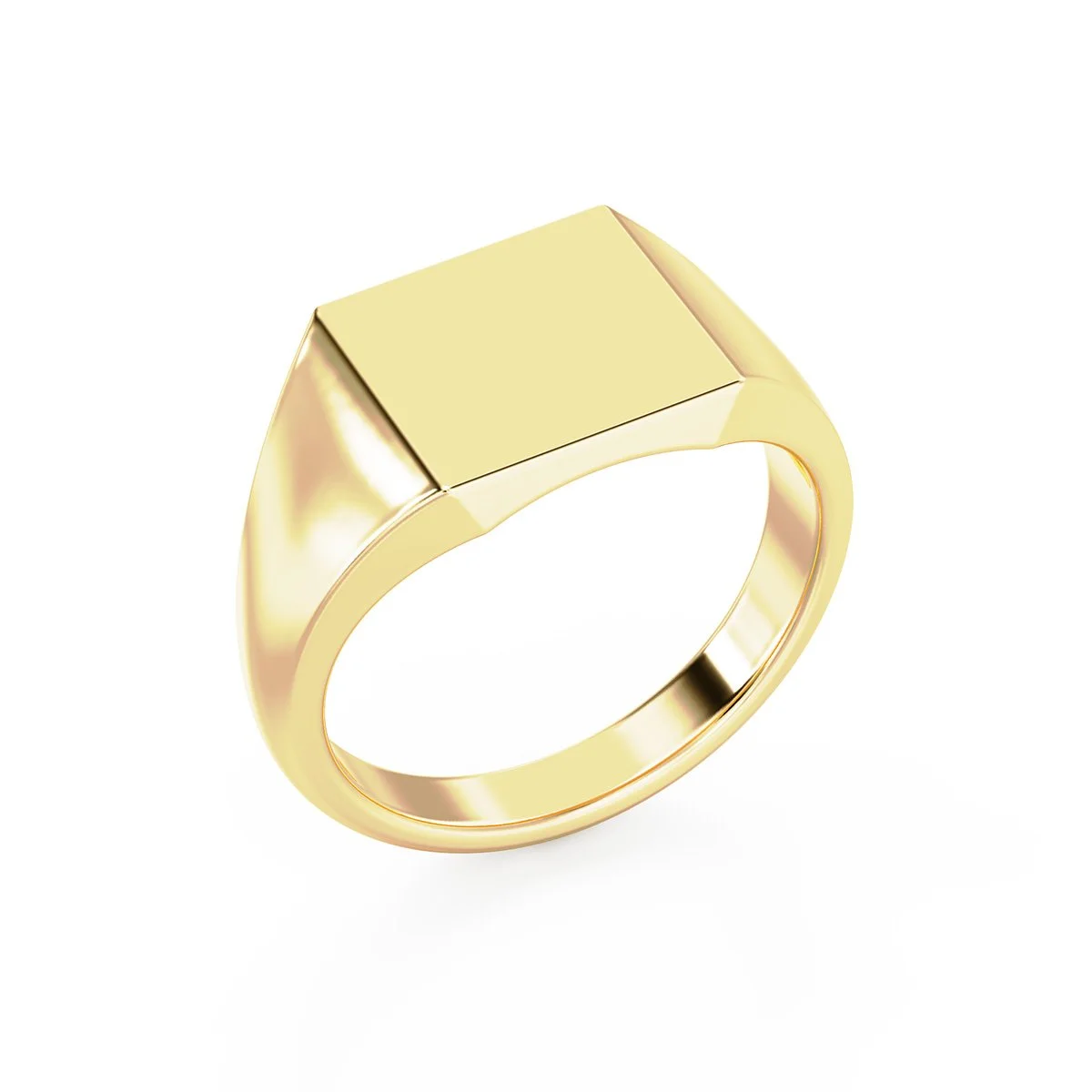
9ct Square Signet Ring

18ct Square Signet Ring
The Different Signet Ring Metal Types
Just as important as its shape, the metal type for your signet ring gives it its fundamental character. This choice defines the ring's colour, its satisfying weight in the hand, and its durability for a lifetime of wear.
Gold (Yellow, White, Rose)
The most traditional metal choice for signet rings is gold. Its weight, value, and history have made it the standard for signet rings for centuries. Classic yellow gold offers a traditional, warm look that's deeply associated with heritage, while white gold provides a brighter, more modern, and neutral tone. For either, the karat (e.g., 9k, 14k, or 18k) will determine its durability and colour richness.

Sterling Silver
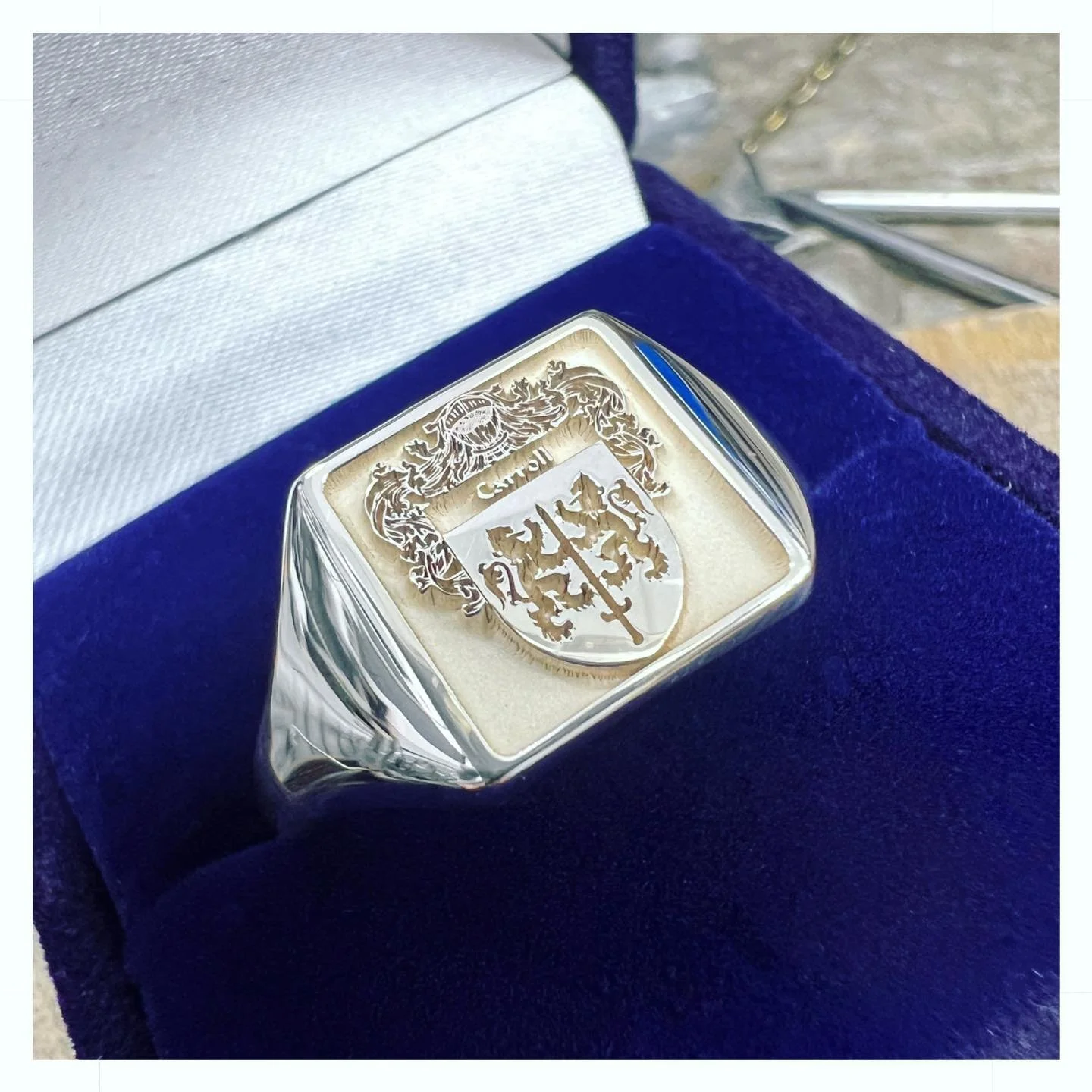
Sterling Silver offers a cooler, more contemporary alternative. It's a modern, more understated option that's also more accessible, and its brighter white finish provides a sharp contrast for detailed engraving.
Platinum
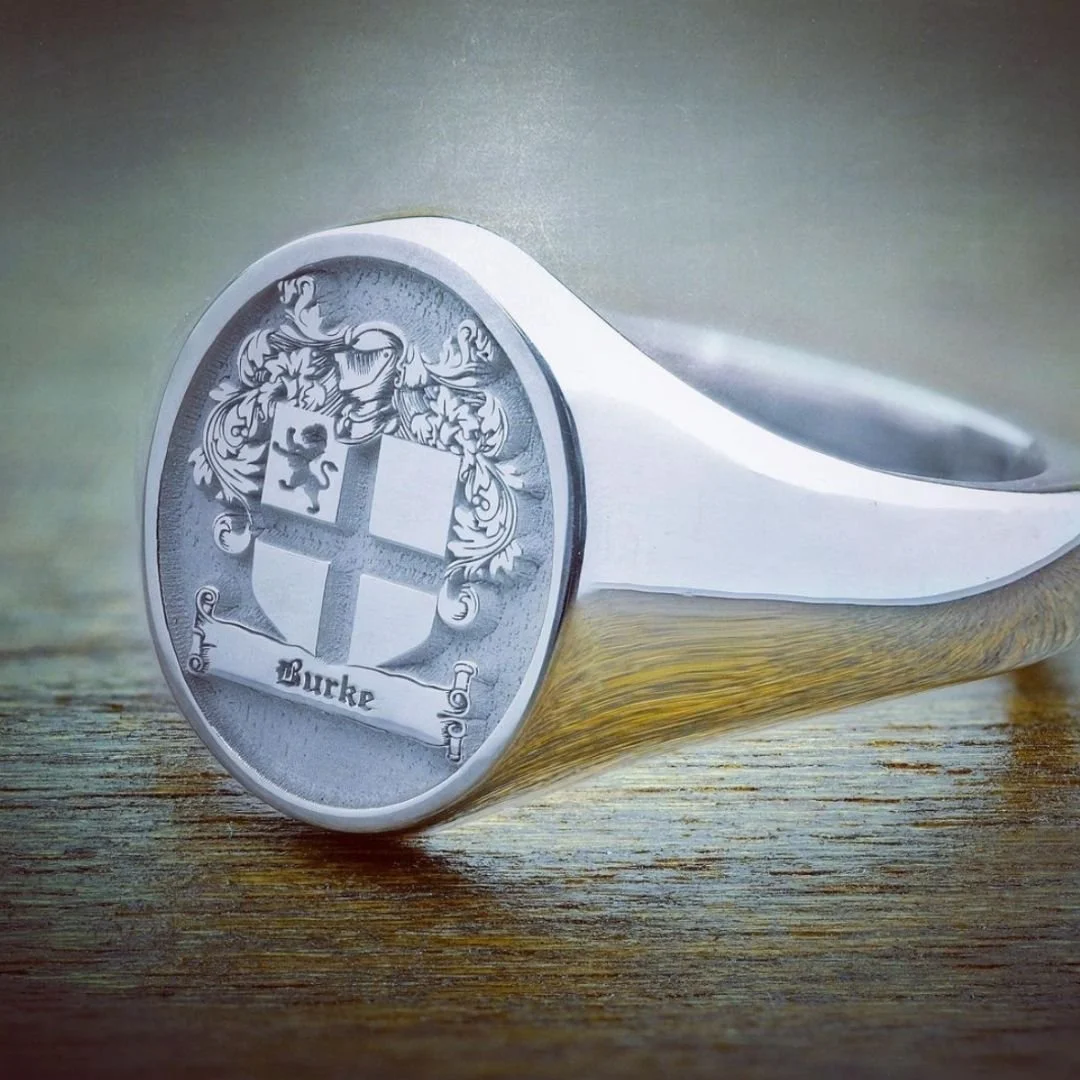
For the premium, most durable option, there is platinum. It's the strongest of the precious metals, with a natural white lustre that won't fade, making it an excellent choice for a ring intended to be worn for a lifetime and passed down as an heirloom.
Personalising Your Signet: Ideas, Designs & Meanings
When it comes to exploring the signet ring engraving options, the choices are as varied as the individuals who wear them —from honouring your lineage to expressing group affiliation to personal identity. Let's explore the most common types.
Family Crests & Coats of Arms
The most traditional design you'll find on a signet ring is a family crest or a full coat of arms. For centuries, this was the ring's primary purpose: to be a portable, wearable representation of one's lineage and heritage. It was an immediate visual cue to one's place in the social hierarchy, a symbol of family pride and belonging.
Monograms & Initials
A more personal and equally classic choice is a monogram or a set of initials, which became popular as the ring's use shifted from official business to personal identity. Whether it's a single, bold initial or an intricate script combining two or three, the monogram is a direct statement of the individual, tying the ring not to a whole family, but specifically to the wearer.
Organisational Insignia
The concept extends beyond family to affiliation. School 'class rings,' military branch insignia, and emblems for fraternal orders or private clubs all function as a type of signet. They act as a visible badge of membership and shared experience, instantly identifying the wearer as part of a specific group.
Personal & Modern Symbols
Today, the symbolism is often entirely personal and created by the wearer. This new wave of signet rings features meaningful icons, zodiac signs, custom-designed logos, or even a single initial of a loved one. In a complete reversal of its crested past, some even choose a blank, polished surface—a minimalist statement that's just as intentional as any engraving.
Engraving Methods (Hand vs. Laser)
You also need to choose your engraving method. Traditional hand-engraving is an artisanal skill in which a master engraver carves metal by hand, resulting in a unique, deep, and fluid line. The alternative is modern laser-engraving, which is digitally precise, consistent, and a more cost-effective way to achieve highly detailed or complex designs.
Engraving vs. Carving
Just as important as the metal is the method of engraving your signet ring. The most common modern style is surface engraving, a lighter etching that reads clearly on the ring itself and is designed purely 'for show.' It's a clear and visible statement of your design.
The alternative is deep-seal engraving, or intaglio, which is the authentic, old-world method in which the design is meticulously carved in reverse into the metal. This method isn't for show on the ring itself; it's designed to create a perfect, raised impression when pressed into wax, just as it was done for centuries.
How to Wear Your Signet Ring
The biggest debate is which finger to wear your signet ring. The most traditional placement is the pinky finger of your non-dominant hand, which was purely practical—it kept the ring out of the way of daily labour. Still, it was easily accessible for pressing into wax to seal a document.
A prevalent modern choice is the ring finger. For many, this finger feels the most natural for a significant piece of jewellery, and it's often worn on the right hand to avoid confusion with a wedding band, or stacked alongside it on the left.
Finally, wearing it on the index or middle finger is the most contemporary, fashion-forward choice. This placement is less about tradition and all about making a bold, confident statement, giving the ring maximum visibility.
As for which hand, tradition is less rigid. Some follow the 'non-dominant hand' rule for the pinky, while others choose the hand that feels most comfortable. Ultimately, unless you're adhering to a specific family protocol, the choice is entirely up to you.
Another common question is orientation: should the design face you, or face the world? Traditionally, a ring with a crest was worn facing outwards, as a statement to those you met. A personal monogram, however, was often worn facing inwards, as a private reminder. Today, it's purely a matter of personal preference.
In terms of styling, the signet ring is versatile. It carries enough weight to be worn as a standalone piece on an otherwise bare hand, making it the clear focal point. But it also works well when balanced with other, simpler rings, or stacked on the same hand to create a curated, personal collection.
Ring Size
First, sizing. A signet ring is typically a 'top-heavy' piece, so a precise fit is essential to ensure it sits correctly on the finger without spinning. It needs to be snug enough to stay put, but still comfortable for daily wear. We recommend getting your professionally sized, specifically for the finger you intend to wear it on.
Budget
Finally, consider your budget. The price of a signet ring can vary widely depending on the metal, weight, and engraving method. A simple, laser-etched sterling silver design will be the most accessible, while a heavy 18k gold signet ring with a deep, hand-engraved crest represents a significant investment.
It's essential to set a budget that balances your desired materials with the quality of the craftsmanship. To make this investment more flexible, you can also use payment options like Klarna. This allows you to secure the ring you truly want by splitting the cost into several manageable, interest-free payments, making an heirloom-quality piece more immediately accessible.
Conclusion: Your Story, Your Custom Signet
Ultimately, the signet ring endures because it's a uniquely personal piece of history. It's more than an accessory; it's a statement of identity, whether that identity is tied to a long lineage or is one you're building for yourself.
It’s a rare accessory that manages to be a blend of timeless tradition and pure, modern self-expression, but the signet ring does precisely that. It's a conversation piece, a statement of style, and a personal signature, all cast in one.
Now we want to hear from you. Do you wear a signet ring with a personal story? Share it with us in the comments below. And if you're ready to start your own legacy, feel free to browse our collection of customisable signet rings or sign up for our newsletter for more guides on timeless jewellery.
Don’t Miss Out on These